

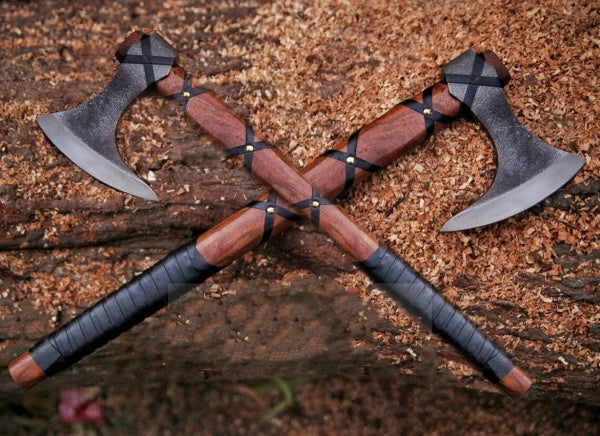
The Viking axe is renowned for its versatility, strength, and symbolic significance, but its creation required remarkable skill and craftsmanship. Forging a Viking axe was a labor-intensive process, combining artistry with functionality. This legacy continues today, as modern blacksmiths and enthusiasts recreate these iconic weapons using both traditional and modern techniques.
Traditional Methods of Forging Viking Axes
In the Viking Age, blacksmithing was a highly respected craft. The process of creating a Viking axe began with raw materials, primarily iron and sometimes steel for high-quality weapons. The methods used were rudimentary by today’s standards but incredibly effective.
- Smelting the Iron: Vikings obtained iron by smelting bog iron, a naturally occurring material found in peat bogs. The smelting process involved heating the bog iron in a bloomery furnace until it reached a malleable state. This produced a porous lump of iron, known as a bloom, which was then hammered to remove impurities.
- Shaping the Axe Head: The blacksmith heated the iron in a forge, shaping it with a hammer and anvil. Viking axes often featured a wide blade and a narrow eye (the hole for the handle). Skilled smiths would forge-weld harder steel to the edge of the axe to create a sharper, more durable cutting edge.
- Tempering and Hardening: Once shaped, the axe head was heated and quenched in water or oil to harden the metal. This process ensured the blade retained its sharpness while remaining tough enough to withstand heavy use.
- Finishing Touches: Viking axes were not purely functional; they were also works of art. Blacksmiths often added decorative elements such as engravings, runes, and inlays of silver or bronze, showcasing their craftsmanship and the cultural importance of the weapon.
- The Handle: The axe handle, usually made from ash or oak, was carefully crafted for durability and balance. Handles were often carved and smoothed to provide a comfortable grip and improve handling during combat.
Modern Replicas: Bridging the Past and Present
Today, modern blacksmiths and craftsmen strive to recreate Viking axes with the same dedication and skill as their historical counterparts. However, they benefit from modern tools and techniques, allowing for greater precision and efficiency.
- Material Selection: Modern smiths use high-carbon steel, which is more readily available and offers superior durability compared to Viking-age iron.
- Forging Techniques: While traditional methods such as hand forging are still practiced, many blacksmiths incorporate modern tools like power hammers, angle grinders, and CNC machines to shape and finish axes more efficiently.
- Authenticity and Artistry: Enthusiasts aiming for historical accuracy often follow traditional methods as closely as possible, including forge-welding and hand-carving handles. Many axes are adorned with intricate engravings, runes, and Norse-inspired designs to honor their cultural heritage.
- Replicas for Combat and Decoration: Modern Viking axes serve various purposes, from functional weapons for historical reenactments to decorative pieces for collectors. Some are designed for axe-throwing competitions, a sport that draws inspiration from Viking combat skills.
The Role of the Modern Blacksmith
The craft of forging Viking axes is kept alive by a dedicated community of blacksmiths, historians, and enthusiasts. Workshops, reenactment events, and online platforms have contributed to a resurgence of interest in Viking weaponry. These artisans not only preserve traditional techniques but also adapt them to meet modern demands.
Conclusion
The creation of Viking axes reflects a deep connection between functionality and artistry, a balance that Viking-age blacksmiths mastered. Whether forged using ancient methods or modern tools, Viking axe for sale remain symbols of craftsmanship, strength, and cultural heritage. By honoring these traditions, modern smiths keep the legacy of the Viking axe alive, ensuring that this iconic weapon continues to inspire admiration and respect for generations to come.

Leave a Reply